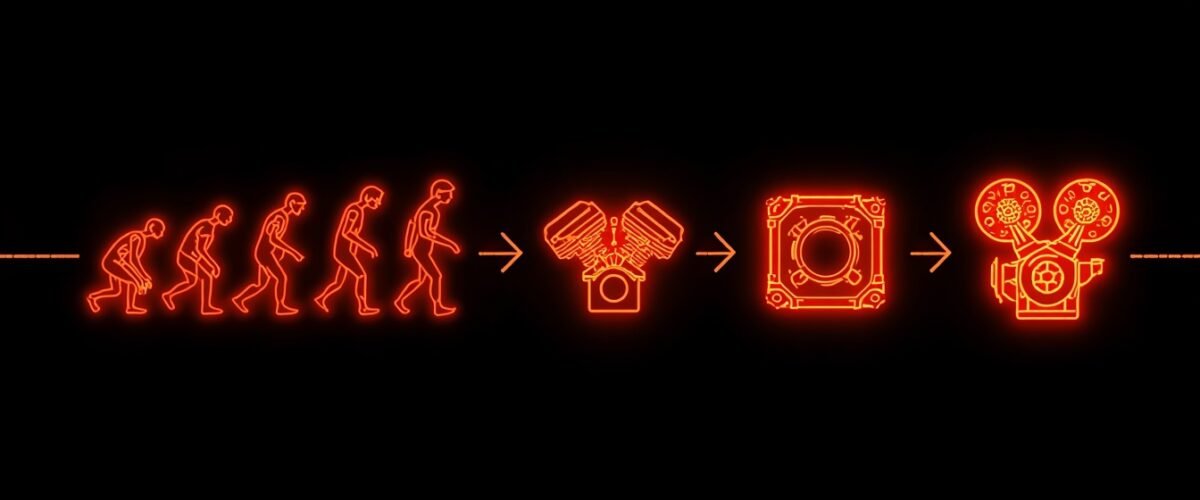
RAGE Engine GTA 6 History:
Every Rockstar open-world game since 2008 has run on some version of the same underlying technology. The Rockstar Advanced Game Engine, better known as RAGE, has quietly powered the studio’s biggest titles for nearly two decades — evolving dramatically with each generation while keeping the same core foundation.
Where RAGE Came From
Before RAGE existed, Rockstar relied on Criterion Games’ RenderWare engine for earlier 3D-era GTA titles. When Criterion was acquired by Electronic Arts in 2004, Rockstar needed its own proprietary technology going forward. Rockstar San Diego’s RAGE Technology Group built the new engine on top of the studio’s existing Angel Game Engine, and the result first appeared in 2006’s Rockstar Games Presents Table Tennis — an unusual, low-key debut for technology that would go on to power some of the best-selling games in history.
GTA IV (2008): RAGE’s First Major Test
GTA IV marked RAGE’s first true open-world stress test, introducing integration with NaturalMotion’s Euphoria for dynamic character animation alongside the Bullet physics library for collision and object handling. The result was Liberty City — a dense, detailed recreation of New York that pushed PS3 and Xbox 360 hardware close to its limits, sometimes at the cost of optimization, particularly on the PC version at launch.
Red Dead Redemption (2010) and Max Payne 3 (2012): Refining the Formula
RAGE’s second major open-world application came with Red Dead Redemption, expanding the engine for a much larger, more naturalistic Western setting. Max Payne 3 followed, adding DirectX 11 support and stereoscopic 3D rendering for PC, alongside generally improved optimization compared to GTA IV’s rocky launch.
GTA V (2013): RAGE’s Biggest Commercial Stage
GTA V brought ambient occlusion improvements, better lighting and particle systems, and eventually full 4K, 60fps support on its later PC release. The game became the best-selling entertainment product of its era, demonstrating RAGE’s ability to scale from PS3-era hardware all the way up to high-end PCs years later through continued updates and re-releases.
Red Dead Redemption 2 (2018): The Engine’s Biggest Leap
RDR2 represented arguably RAGE’s most significant overhaul, adding physically based rendering, volumetric clouds and fog, pre-calculated global illumination, and a heavily reworked Euphoria implementation supporting more advanced AI-driven physical behavior. Later updates added HDR support and modern upscaling technologies like DLSS and FSR.
GTA 6: The Next Major Leap
GTA 6 represents RAGE’s first exclusively current-gen open-world application — no PS4 or Xbox One version holding back what the engine can achieve. Building on RDR2’s advances in lighting, physics, and AI, combined with PS5 and Xbox Series X/S hardware that’s dramatically more capable than the seventh-generation consoles RAGE originally launched on, GTA 6 is positioned to be the most technically ambitious application of the engine yet.
Why RAGE Has Lasted So Long
Few proprietary engines survive nearly two decades of continuous use across multiple console generations. RAGE’s longevity comes down to its modular architecture, allowing Rockstar to swap and upgrade individual components (rendering, physics, animation) without rebuilding the entire engine from scratch for each new title — a flexibility that’s let it scale from 2006’s Table Tennis all the way to a game built for 2026’s hardware.
Staying Updated as More Details Emerge
Rockstar Games has historically revealed information gradually in the months leading up to a major release, and rAGE Engine History: GTA 4 to GTA 6 (20 Years of Evolution) is likely to see further clarification as the November 19, 2026 launch date approaches. Official trailers, marketing materials, and eventual hands-on previews will all provide additional data points that either confirm or reshape current community understanding.
In the meantime, this remains an active area of discussion across gaming forums and social media, with dedicated fans continuing to compare notes on every new piece of footage or statement Rockstar releases. Checking back for updates as new information becomes available is the best way to stay current on this specific aspect of GTA 6.
Frequently Asked Questions
Q: What does RAGE stand for?
Rockstar Advanced Game Engine, Rockstar’s proprietary in-house technology.
Q: When did RAGE first appear in a GTA game?
Grand Theft Auto IV in 2008 was RAGE’s first major open-world application.
Q: What engine did Rockstar use before RAGE?
Criterion Games’ RenderWare engine, used for earlier 3D-era GTA titles before Criterion was acquired by EA in 2004.
Q: Is GTA 6 built on the same engine as GTA 5?
Yes, GTA 6 uses an evolved version of the same RAGE engine, though significantly upgraded for current-gen-only hardware.
Q: What was RAGE’s biggest technical leap before GTA 6?
Most analysts point to Red Dead Redemption 2 in 2018 as the engine’s most significant overhaul prior to GTA 6.